

КАРХАБ
  • ГЛАВНАЯ
  • АВТО
  • МОТО
  • КОНТАКТЫ
  • РЕЙТИНГИ
  • РЕКЛАМА
Нет результатов
Посмотреть все результаты
КАРХАБ
Нет результатов
Посмотреть все результаты
Главная Лента Авто

Lost in Translation: FT-1 Designer Explains Why Toyota’s Production Supra Didn’t Match the Concept

Яков Корчевод by Яков Корчевод
24.07.2026
в Авто
0
0
Lost in Translation: FT-1 Designer Explains Why Toyota’s Production Supra Didn’t Match the Concept
0
ПОДЕЛИЛИСЬ
1
ПОСМОТРЕЛИ

The fifth-generation Toyota Supra has effectively come and gone, and with no direct replacement expected for the foreseeable future. And it feels a little weird to say that, because as Caleb pointed out as few months ago, it really doesn’t seem like the car was with us for all that long.

We sat down with Alex Shen, Studio Chief Designer at Calty Design. Calty is Toyota’s California-based design studio, and it’s the outfit that was responsible for (among many other things) the concept car that eventually became the MkV Supra, who helped explain the disconnect between concepts and their modern production equivalents. And in the process, he gave us some insight into how modern customer demands are shaping new design trends.

Calty handles a lot of exploratory design. With that directive, it stands to reason that its concepts will push boundaries—often beyond what is feasible from a production standpoint. The team produces a lot of what Shen calls “early studies”—vague designs intended to suggest stylistic elements and not necessarily indicative of any final product.

“We’re an advanced design studio so a lot of our work is not really intended for the public consumption,” Shen said. “Maybe those ideas aren’t quite hashed out yet, or still kind of in the works.”

Naturally, not every design the studio churns out will end up being featured by the brand, let alone produced. So when something does make it all the way through the pipeline, the way the Toyota FT-1 eventually became the new Supra, it tends to prompt reflection.

“Time always tells how good of a product you designed,” Shen said.

Each year, Calty designers choose a project that they want to explore. The Supra (which wasn’t yet called that) was one such selection, and the team decided that the best way to pitch a new design would be to give the brass an opportunity to actually experience it.

At the time, Shen said, sports cars were viewed as money-losers. It never occurred to him this was likely to be approved, and Toyota wasn’t struggling with the traditional appeal issues that might normally prompt an automaker to roll the dice on something exciting.
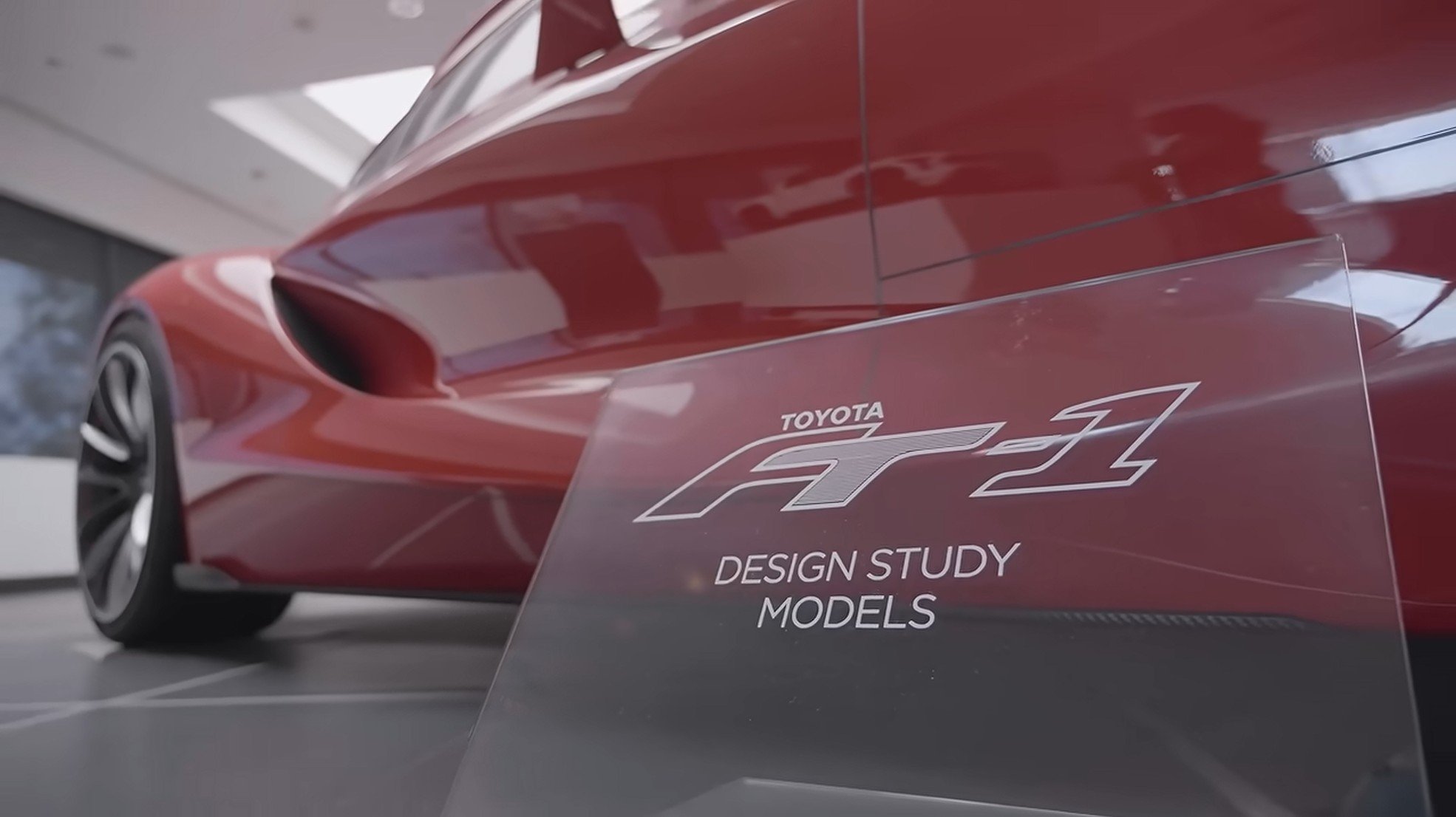
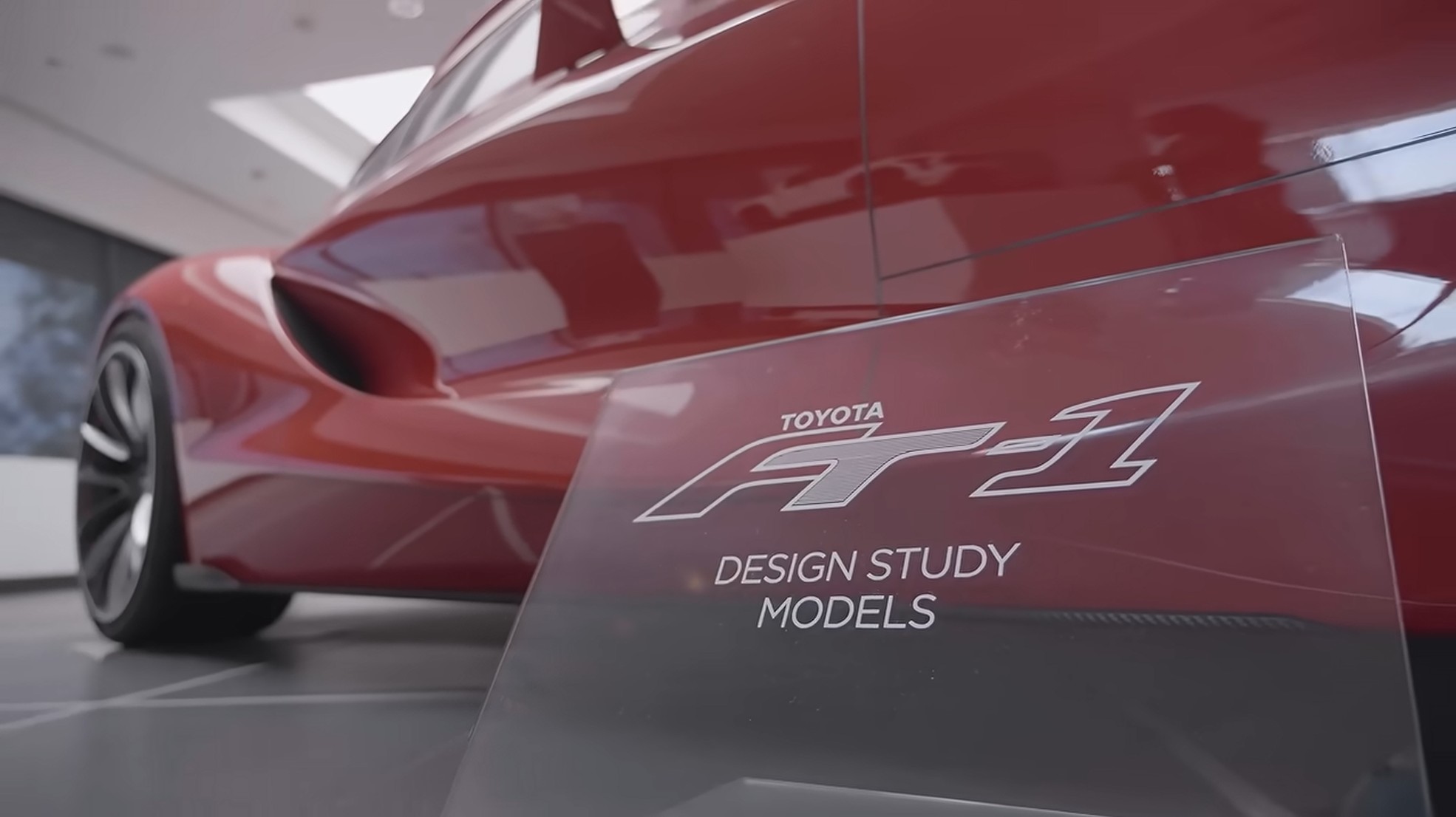
Toyota FT-1 Concept

“We hadn’t heard anything about, you know, any production plans in the future,” he said. “We had a pretty good image at the time already.”

“The thing that kind of kept it a Supra was kind of the spirit of what it’s supposed to do, right? Version by version, it changed from like a Celica Supra to a pure sports car,” Shen said.

Naturally, that prompted the team to ask a fairly obvious question: “What should it be next?”
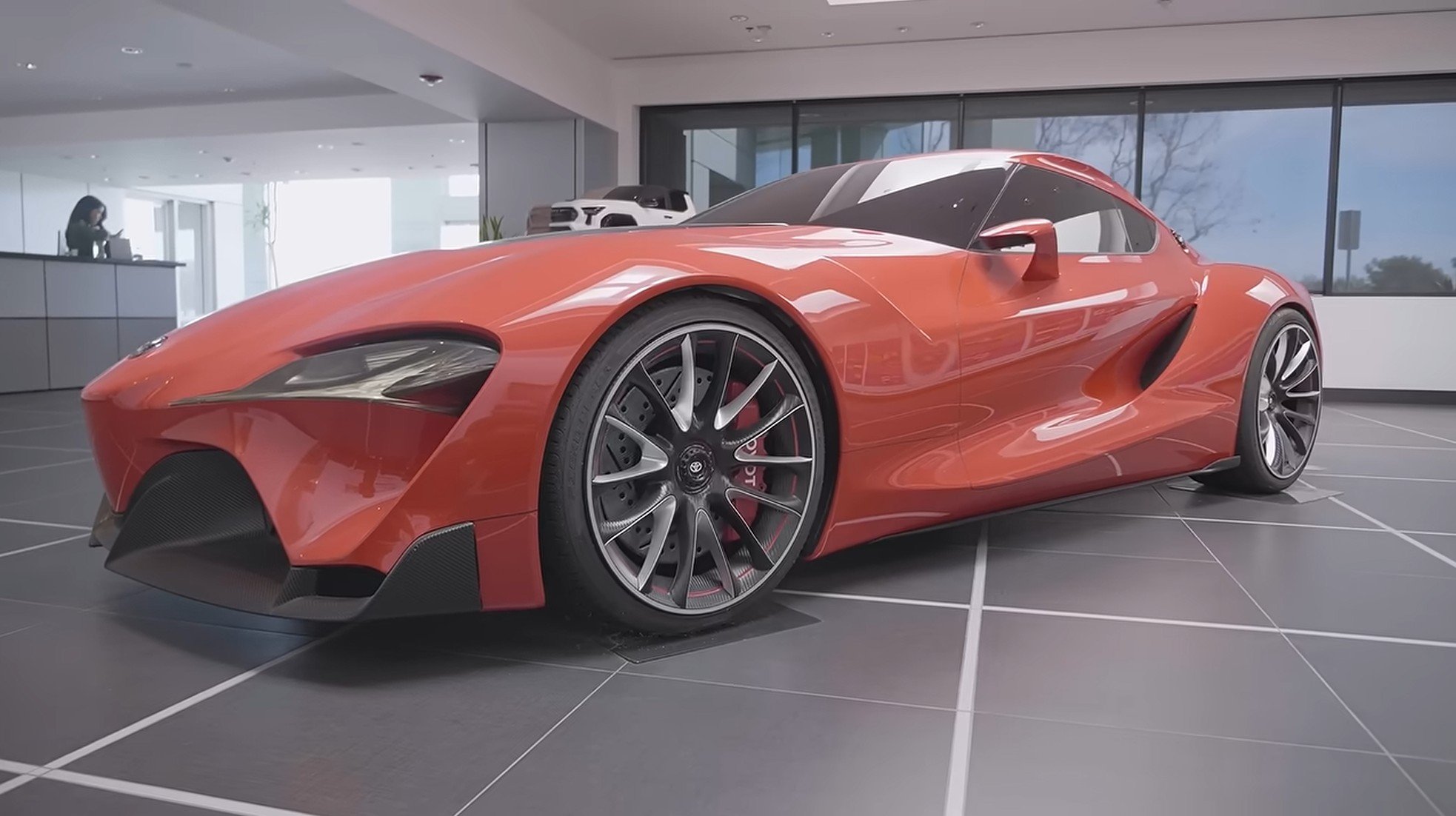
The result was the FT-1. But given the headwinds facing the segment, looks alone wouldn’t seal the deal with the brass. Calty decided it needed to take a more sophisticated approach.

“You’re supposed to drive these sports cars. It should be visceral,” Shen said. “It’s not enough just to put a car out there, right?”

There was just one problem. At the time, Calty didn’t have anything remotely like an actual car to show; all they had was a design. That’s where Polyphony Digital came in.

“So we put it in the machine. We put it in Gran Turismo,” Shen said.

After just a couple of laps in the digital FT-1, Akio-san was sold. Word came down immediately from Calty leadership that the team was cleared to build a show car—something automakers are less and less inclined to do these days—and nobody had even come close to green-lighting production yet.

The joint platform with BMW and all the complexities that would entail weren’t even Calty’s team radar. They’d have to reconcile their design with both the physical constraints of the shared hardware and the financial constraints of a program that—perhaps not in so many words—really wasn’t expect to make any money.

Given all that, it’s a wonder they made the thing at all, right?

Got a story tip? Let us know at tips@thedrive.com!

Источник: Lost in Translation: FT-1 Designer Explains Why Toyota’s Production Supra Didn’t Match the Concept appeared first on The Drive.

Теги: thedrive
ПоделитьсяПоделитьсяПоделиться

Яндекс

Свежие новости

?Polizia Usa e Mustang GT, il ritorno di fiamma dopo l’addio negli anni ’90. Le belve in divisa utilizzano il motore V8 da 486 cv

Xpeng guarda oltre l’automobile: dalla Physical AI ai robot umanoidi, passando per Robotaxi e auto volanti

Kyle Larson responds to Scott Dixon: NASCAR races are too long

GP di Ungheria, libere 2: doppietta Ferrari con Hamilton e Leclerc, Antonelli in difficoltà è solo 13esimo

How Copart Auctions Work in New Hampshire: 2026 Buyer’s Guide

Christopher Bell leads Brickyard 400 practice; Bubba Wallace and SVG hit wall

F1 Hungarian GP: Saturday schedule, weather forecast and how to watch

George Russell: What Mercedes ‘feared’ from Ferrari came true in F1 Hungarian GP practice

Lost in Translation: FT-1 Designer Explains Why Toyota’s Production Supra Didn’t Match the Concept

Fernando Alonso delivers first verdict on Aston Martin F1 car upgrades

Архивы

О нас

КАРХАБ

«КАРХАБ» — это главная автомобильная лента. Только проверенные новости, острые мнения, эксклюзивные интервью и подробные аналитические материалы. Мы там, где рождается история авто, и делимся ею с вами без пауз и скуки.

Адрес: 127018, Россия, г. Москва, ул. Двинцев, 12к1Б
Email: info@sportanet.ru

«КАРХАБ». Все права защищены. Использование материалов, опубликованных на сайте, разрешается только при условии обязательной прямой гиперссылки на конкретный материал. Любое иное использование (копирование, воспроизведение, распространение) без письменного согласия редакции запрещено

Свежие новости

?Polizia Usa e Mustang GT, il ritorno di fiamma dopo l’addio negli anni ’90. Le belve in divisa utilizzano il motore V8 da 486 cv

Xpeng guarda oltre l’automobile: dalla Physical AI ai robot umanoidi, passando per Robotaxi e auto volanti

Kyle Larson responds to Scott Dixon: NASCAR races are too long

GP di Ungheria, libere 2: doppietta Ferrari con Hamilton e Leclerc, Antonelli in difficoltà è solo 13esimo

How Copart Auctions Work in New Hampshire: 2026 Buyer’s Guide

Christopher Bell leads Brickyard 400 practice; Bubba Wallace and SVG hit wall

F1 Hungarian GP: Saturday schedule, weather forecast and how to watch

George Russell: What Mercedes ‘feared’ from Ferrari came true in F1 Hungarian GP practice

Lost in Translation: FT-1 Designer Explains Why Toyota’s Production Supra Didn’t Match the Concept

Fernando Alonso delivers first verdict on Aston Martin F1 car upgrades

Запрещены в РФ

› Перечень иностранных и международных неправительственных организаций, деятельность которых признана нежелательной

› В России признаны экстремистскими и запрещены организации

› Организации, СМИ и физические лица, признанные в России иностранными агентами


В случае потери форматирования и потери маркировки в записи, пожалуйста, сообщите нам.

© 2026 «КАРХАБ». Все права защищены. Использование материалов, опубликованных на сайте, разрешается только при условии обязательной прямой гиперссылки на конкретный материал. Любое иное использование (копирование, воспроизведение, распространение) без письменного согласия редакции запрещено.

© 2026 CARHUB - ТОП автоновостей

Нет результатов
Посмотреть все результаты
  • ГЛАВНАЯ
  • АВТО
  • МОТО
  • КОНТАКТЫ
  • РЕЙТИНГИ
  • РЕКЛАМА

© 2026 CARHUB - ТОП автоновостей

С возвращением!

Войдите в ваш аккаунт

Забыли пароль?

Создать новый аккаунт!

Заполните поля, чтобы зарегистрироваться

Все поля обязательны Войти

Повторите пароль

Введите детали, чтобы сбросить пароль

Войти